Improvisational Practices + Techniques
Produced by Living Arts Collective , Contact Improvisation and Somatics
Facilitated by: Anna M. Maynard
Duration: 6 Weeks
Format: Experiential seminar + movement laboratory
Course Focus: The study of lived experience through somatic perception, relational awareness, and sustained practice.
-
This 6-week class explores a range of movement improvisation practices that can be applied across disciplines, including dance, performance, and music. Together we will work with improvisational scores, perceptual exercises, and compositional tools that support real-time decision making and responsiveness in practice.
The focus of the work includes orientation, meaning making, image composition, and the thinking and sensing body within both individual and collective contexts. Through solo and ensemble exploration, students will engage with how movement emerges through attention, relationship, and shared space.
Participants will develop a set of practical tools, questions, and frameworks that support clarity, curiosity, and intention while improvising.
-
By the end of the course, students will be able to:
• articulate basic concepts of somatic perception and phenomenological inquiry
• identify how attention and orientation shape improvisation
• demonstrate increased capacity for observation and listening in movement contexts
• recognize energetic and relational dynamics within group environments
• movement exercises that increase and support dexterity
• develop an individual practice grounded in sensory awareness -
Each session includes:
• arrival and grounding practice
• guided movement research
• perceptual exercises (solo, duet, group)
• performance, observation and reflection
• discussion -
Students are asked to:
• arrive on time and consistently, prepared for physical activity
• participate in movement and observation exercises
• maintain a weekly reflective journal
• engage respectfully in group processes
• take responsibility for personal physical and emotional limitsNo prior dance experience is required. Commitment to inquiry is essential.
Weekly Outline
Week 1 : Somatics: The Body as a Site of Knowledge
Felt Sense, turning toward one self
Authentic Movement
Tuning Score
Week 2 : Phenomenology: Experience as It Appears
Perception and meaning-making
Attention and the shaping of experience
Subjective and relational viewpoints
Week 3 : Orientation: Organizing in Relation to Environment
Spatial awareness and relational positioning
Listening as receptive attention
Movement as response to context
Week 4 : Energetics and Attunement
Felt intensity, rhythm, and charge
Interpersonal sensing and group field dynamics
Adaptive relational response
Week 5 : Systems + Tone
Nervous system modulation
Conditions that support sustained awareness
Working with fluctuation and change
Week 6 : Practice: Integration and Application
Repetition as a tool for perceptual refinement
Articulating personal frameworks of practice
Collective reflection and synthesis
This course is an invitation to study how you are within experience as it unfolds. Through sustained attention, relational awareness, and practice, students develop tools for navigating perception, presence, and embodied learning in, and beyond the dance.
Week 1 : The Body as a Site of Knowledge
Felt Sense, turning toward one self
Authentic Movement
Tuning Score - Starting with Sound
Self awareness, in community
Somatics - an approach to understanding and working with the body through first-person experience. It centers on sensing internal states and movement as they are lived from within, supporting awareness of how sensation, attention, and environment shape action.
Hanna, Thomas. “What is Somatics?” In Bone, Breath and Gesture: Practices of Embodiment, edited by Don Hanlon Johnson, 339–352. Berkeley: North Atlantic Books, 1995.
Focusing - a somatic practice developed by Eugene Gendlin that centers on attending to the “felt sense,” a subtle bodily knowing that forms before clear words or ideas. Through quiet listening and descriptive language, a person stays with this internal edge of experience, supporting awareness, integration, and authentic expression.
Gendlin, Eugene T. Focusing. Bantam Books, 1982.
Authentic Movement - a somatic improvisational practice in which a mover follows internal impulses while being witnessed by another person or group. Often with eyes closed, the mover allows sensation, image, and impulse to guide movement, while the witness supports awareness and reflection within a shared relational container
Adler, Janet. Offering from the Conscious Body: The Discipline of Authentic Movement. Inner Traditions, 2002.
Tuning Scores — an improvisational performance practice developed by Lisa Nelson that uses simple verbal cues, shared attention, and compositional awareness to explore how perception shapes action. Performers work with timing, framing, spatial relationship, and the act of watching as primary materials, allowing movement and structure to emerge through real-time decision-making.
Nelson, Lisa. “Tuning Scores.” In Contact Quarterly Sourcebook: Collected Writings and Graphics from Contact Quarterly Dance Journal, edited by Nancy Stark Smith and Lisa Nelson. Contact Editions, 1997.
Week 2 : Phenomenology: Experience as It Appears
This week we will enter a shared field of inquiry around how experience is shaped from the inside out. The work will move through perception, attention, and relation as living processes. We will approach these themes through gentle exploratory structures that invite awareness without requiring performance or outcome while also allowing it to be a possibility.
Perception and meaning making
We will consider perception as the way experience is received and organized in the body. Meaning making refers to how sensation, memory, imagination, and social conditioning influence what we interpret from what we encounter. This includes noticing how orientation toward or away from something alters what becomes visible or felt.
Attention and the shaping of experience
Attention will be treated as an active force that can expand or contract the field of experience. Where attention rests, experience gathers. By shifting attention, we influence tone, scale, and the felt architecture of a moment. We will explore how attention functions as a compositional tool in real time.
Subjective and relational viewpoints
Subjective viewpoint refers to one’s own internal sensing and interpretation. Relational viewpoint considers how experience is co shaped in the presence of others. We will investigate how these viewpoints move together, diverge, or overlap, and how awareness of both can deepen responsiveness and clarity.
The class will unfold through quiet, playful encounters that center sensing, noticing, and gradual articulation. The emphasis will be on tracking experience rather than producing form. Participants are encouraged to arrive with curiosity, patience, and a willingness to remain in process.
Ahmed, Sara. Queer Phenomenology: Orientations, Objects, Others. Duke University Press, 2006.
Week 3 : Orientation + Composition: Organizing in Relation to Environment
In this class, we work with composition as something already alive in the room. We track how attention moves, how bodies orient, and how space is shaped moment to moment through relation. You will practice noticing what you are seeing and sensing, what you are offering, and how it lands. We will explore how attention gathers and disperses, how it feels to be seen, and how the nervous system responds as the room turns toward or away from you. Through simple structures and improvisational scores, we will work with ideas, impulses, and the tension between following and forcing. Composition becomes a shared activity—something we are all inside of, shaping together, whether moving, witnessing, or both.
“But when we look at dance not as a moral fable but as an orchestration of energies, I think we reach a psychology that lies entirely apart from morality– something deep in our experience, something that may correspond to actual biochemical processes. Who knows?…” - Joan Acocella*
Week 4 : Attunement - Self and others, Being Seen and Being with
The goal of these practices is to become familiar with your at-rest nervous system landscape, the dancing range, and the patterns within it. From there, to notice what happens when attention is placed on you, when the tone heightens, and the autonomic nervous system begins operating at a different level under the condition of being perceived.
With reference to Queer Phenomenology, specifically “Starting Points” (pp. 5–7), this improvisation score begins with the image of entering a dark room, a familiar dark room. Later, this may shift into a dark unfamiliar room where discovery is required.
To begin, it feels most clear to start with a familiar room. Even though you know what is there, you are still feeling the edges of the desk, the light, the printer, the chair.
While this early version remains quite literal, the room begins to shift toward an emotional space inside the body. You step into the room of where a part lives, and begin to describe the felt sense of that space. You build out a sense of where that part feels most safe, or alive, or present, or even locked in.
There is curiosity around what that might be like, especially if the part feels bound in some way.
The room, initially imagined as a familiar physical space, begins to expand into an energetic one. The exercise then becomes about patterns in the body, familiar dancing patterns, possibly in conversation with a part. What feels familiar in the body becomes a guiding question.
Alongside this, attention turns toward what feels unfamiliar. This may arise in relation to being perceived.
The imagination of being perceived is introduced, and with it, the unfamiliar sensations that may emerge in the body, including disorientation. This state can resemble being in a dark room, feeling your way through, as if a helmet is on, learning how to become familiar within that condition.
The practice holds both states, familiarity and disorientation, allowing orientation to emerge through the body over time.
-
Acocella, Joan. “Imagining Dance.” Moving History/Dancing Cultures: A Dance History Reader, edited by Ann Dils and Ann Cooper Albright, Wesleyan University Press, 2001, pp. 12–16.
Ahmed, Sara. The Cultural Politics of Emotion. Routledge, 2004.
Ahmed, Sara. Queer Phenomenology: Orientations, Objects, Others. Duke University Press, 2006.
Albright, Ann Cooper. How to Land: Finding Ground in an Unstable World. Oxford University Press, 2019.
Albright, Ann Cooper. “Resistance and Support.” Contact Quarterly, vol. 50, no. 1, Winter/Spring 2025.
Brown, adrienne maree. Emergent Strategy: Shaping Change, Changing Worlds. AK Press, 2017.
Butler, Judith. Notes Toward a Performative Theory of Assembly. Harvard University Press, 2015.Deleuze, Gilles, and Félix Guattari. A Thousand Plateaus: Capitalism and Schizophrenia. University of Minnesota Press, 1987.
Hanna, Thomas. Somatics: Reawakening the Mind’s Control of Movement, Flexibility, and Health. Addison Wesley, 1988.
Hanna, Thomas. Bone, Breath, and Gesture: Practices of Embodied Awareness. Freeperson Press, 2006.
Merleau Ponty, Maurice. Phenomenology of Perception. Routledge, 2012.
Rethorst, Susan. A Choreographic Mind: Autobodygraphical Writings. Theatre Academy Helsinki, 2012.Sgorbati, Susan, Emily Climer, and Marie Lynn Haas. Emergent Improvisation: On the Nature of Spontaneous Composition Where Dance Meets Science. Contact Quarterly, 2013.
Stark Smith, Nancy. Caught Falling: The Confluence of Contact Improvisation, Nancy Stark Smith, and Other Moving Ideas. Contact Editions, 2008.
-
This work is a sustained study of how experience is lived, shaped, and transformed through the body in relation to others, space, and attention. It centers somatic perception as a primary source of knowledge, using improvisation as a way to track how we sense, orient, and make meaning in real time. Through simple structures and shared scores, participants move between being seen and seeing, acting and receiving, familiar patterns and disorientation, gradually building awareness of how attention, environment, and relational presence compose both movement and experience. Over time, the practice develops a capacity to stay with what is unfolding, to recognize internal states as they arise, and to participate consciously in the shaping of a shared field.
Amanda K. Miller
An American dancer and choreographer who performed with William Forsythe at Ballett Frankfurt, where she developed a strong foundation in spatially driven, improvisational dance. She later founded Pretty Ugly Tanz Köln in Germany, creating work known for its sharp physicality, structured improvisation, and distinctive, unconventional movement language.
Week 5 : Systems + Tone
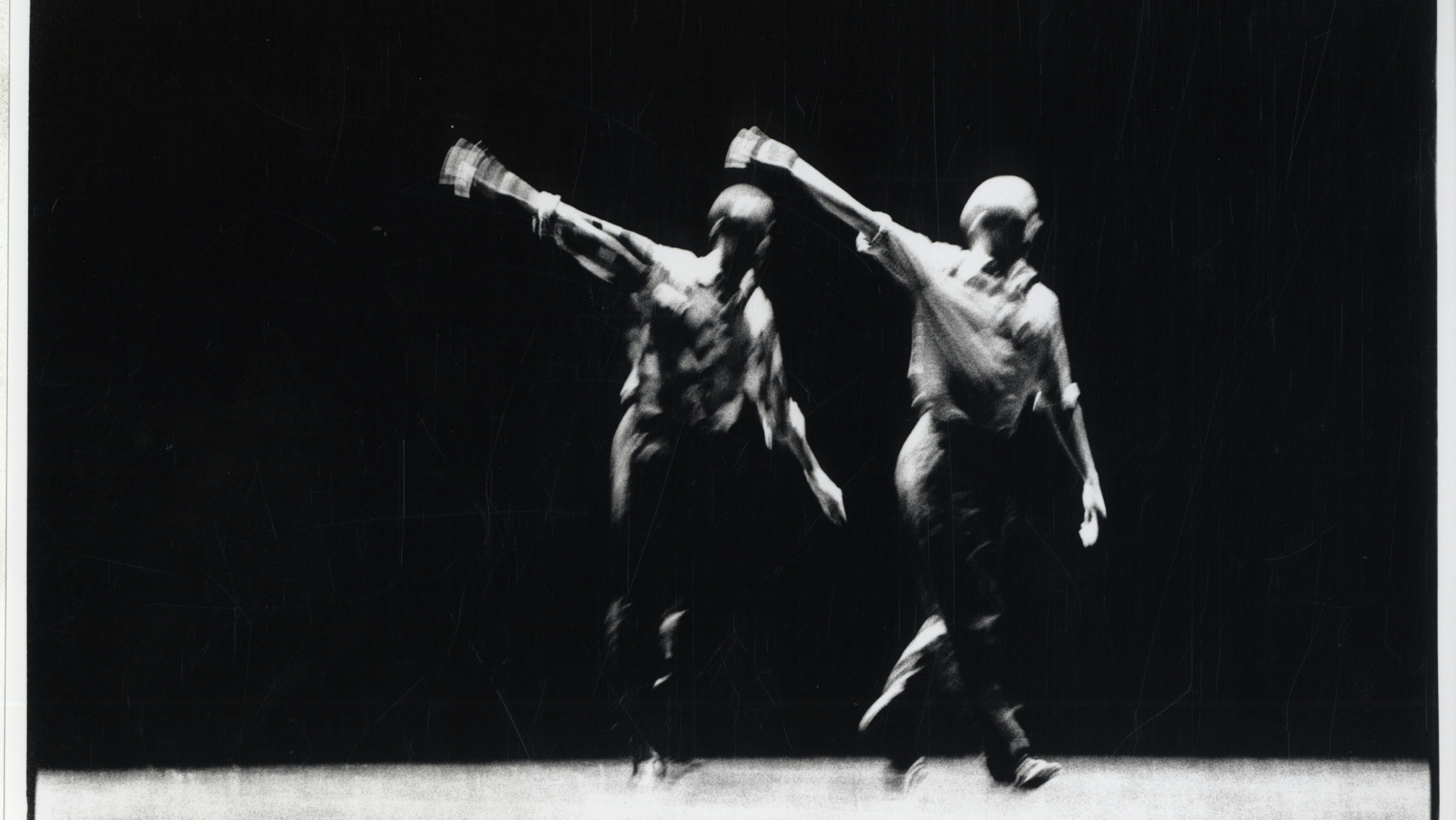
Amanda Science
A finely tuned physical intelligence, where structure holds the body steady as movement slips, interrupts, and reorganizes itself in real time.
Tone
The continuous state of readiness in the body. Tone is what holds form without fixing it, the background field that allows movement, perception, and emotion to arise. It reflects both muscular engagement and emotional state, linking physiology and affect through moment-to-moment adjustment.
Tonic muscles
Postural muscles that maintain stability, balance, and continuous support. They work slowly and stay active for long periods.
Phasic muscles
Movement muscles that create action like lifting, reaching, or stepping. They activate quickly and for short durations.
Hubert Godard
Hubert Godard distinguishes between phasic and tonic muscles. Phasic muscles are those that move us— they contract, lift, and propel. Tonic muscles, by contrast, are the background organizers of posture and orientation. They maintain our relationship with gravity, support our sense of verticality, and underlie every gesture. Godard’s insight reveals that movement arises through tone: the tonic field gives coherence to the body’s relation to space, the ground from which action becomes possible.
Week 6 : Deepening Contact
This week we gather several threads from the series into a practice of deepening contact. We will move through forms that support awareness, relationship, inner listening, witnessing, and shared physical dialogue. The through line is how contact begins before touch, in attention, sensation, and presence.
Perception
The ongoing act of sensing and noticing through the body. How we experience ourselves, others, and the room in real time.
Circling
A practice of speaking from present moment experience. Noticing sensations, emotions, thoughts, and relational dynamics as they arise, then naming them simply and directly.
Focusing
Turning inward to listen for the body’s subtle and not yet fully formed knowing. Allowing image, language, and movement to emerge from the felt sense of the moment.
Authentic Movement
Following inner impulse into gesture and action while being witnessed with care and attention. Moving from within and practicing being seen.
Contact Improvisation
Awareness meeting shared physical relationship through touch, weight, momentum, balance, and responsiveness. Listening through movement and building real time composition together.